

ActualitésActu13 août 2026
Xavi to the Netherlands: Morocco eliminated him, then didn't want him
The Netherlands officially announced Xavi's appointment until 2030 on Wednesday. The Spaniard succeeds Ronald Koeman, who was dismissed the day after the Dutch team's elimination by Morocco in the 2026 World Cup. However, Xavi himself had long been rumored to be taking over the Moroccan bench, before Rabat decided to stick with a local coach.
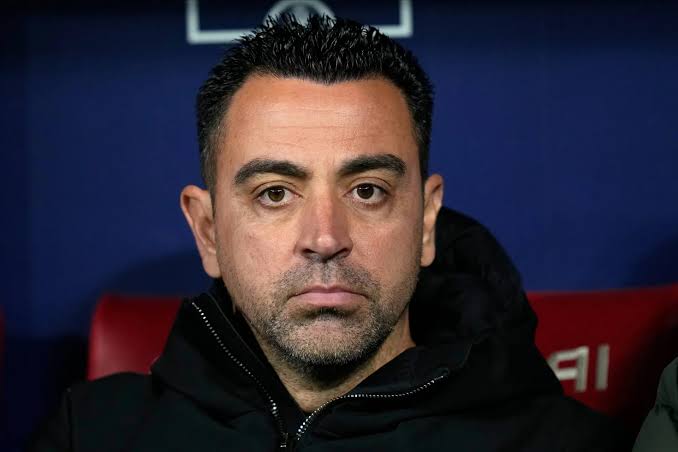
The Official Announcement
The Dutch federation announced on August 12 the appointment of Xavi Hernández as the Oranje's manager. The contract runs until 2030, which is until the World Cup hosted by Spain, Portugal, and Morocco. The federation even accompanied its announcement with the hashtag Xavi2030.
He succeeds Ronald Koeman, whom the Netherlands parted ways with the day after their elimination by Morocco in the 2026 World Cup. Roberto Martínez's name had also been circulating.
The Triangle No One Tells You About
Here's what this appointment brings together, and which deserves to be read in order.
Morocco eliminates the Netherlands from the World Cup. The Netherlands part ways with their manager the very next day. And they hire Xavi, precisely the coach that Morocco had considered before deciding not to hire him.
Xavi had indeed been linked with the Moroccan bench for months, first as a successor to Walid Regragui, then as an option after the World Cup if the project entrusted to Mohamed Ouahbi was not satisfactory. The Moroccan federation decided otherwise: they maintained their confidence in Ouahbi.
This is a decision worth noting. An African national team that has just eliminated the Netherlands from a World Cup has chosen continuity with a national coach, rather than the prestige of an available and interested European name. Ten years ago, this kind of choice would likely have gone the other way.
The fact that Europe then recruits the candidate rejected by Rabat reverses a hierarchy that is often taken for granted.
What Xavi Said Before
His own statements, prior to this appointment, shed light on what followed. They deserve to be quoted in full, because they contain a word that few outlets will remember.
"I would like a national team, yes. I say it openly. I am motivated to participate in a World Cup, a EURO, an Africa Cup of Nations, or even an Asian Cup. What I would like is a good project, a project where we can work calmly. Club life doesn't allow me to be with my family much, I have young children."
An Africa Cup of Nations. A former FC Barcelona captain and World Cup winner spontaneously listing the Africa Cup of Nations among the competitions that motivate him, on the same level as a European Championship or a World Cup. This is significant, and it's the kind of statement that speaks to the evolution of how African football is viewed better than any commentary.
What Remains to Be Proven
We should guard against automatic enthusiasm.
Xavi managed FC Barcelona, where he won La Liga in 2023, before a departure that was not universally acclaimed. His record as a national team manager, however, is non-existent: this is his first post at the helm of a national team.
Yet the two roles are not similar. A national team manager does not recruit, does not work daily with his players, and has a few gatherings per year to instill a playing style. Many excellent club coaches have faltered in this role, and the reverse is also true.
Xavi also explained his choice by largely personal reasons — the pace, family, calm — which is perfectly legitimate, but says nothing about his ability to succeed in this specific task.
The Schedule
The contract runs until 2030. It therefore covers the qualification and the final phase of the World Cup jointly hosted by Spain, Portugal, and Morocco.
In other words, if both national teams qualify, Xavi could face Morocco — the country that cost his predecessor his job, and which preferred another coach over him — on Moroccan soil.
Sources: Royal Dutch Football Association (official announcement), via Foot Mercato. As of August 13, 2026.