

ActualitésActu20 août 2026
PSG-Rennes at Roazhon Park: one word from the LFP's statement will decide a home game
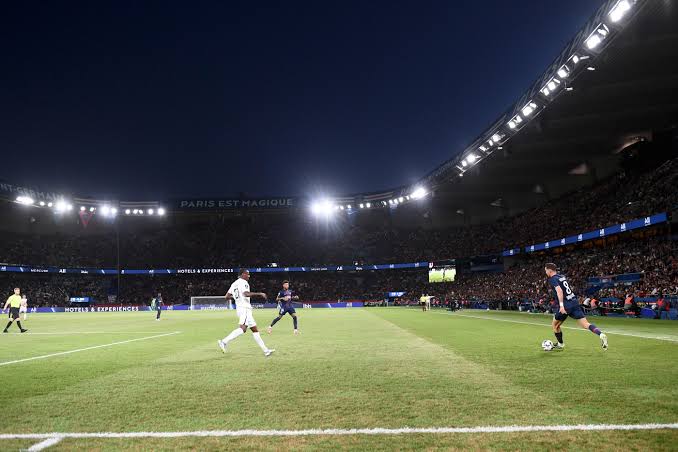
Ligue 1 kicks off on Sunday in Rennes and not Paris: the Parc des Princes pitch has been deemed unplayable after inspection. Three official statements say so. But the LFP speaks of an "inversion," Rennes defends a simple "relocation," and according to RMC, the Bretons will contest it. Behind this word: a match against PSG in March.
What is established
This case has a rare quality: almost everything is documented by official statements. Let's start with what is beyond doubt.
The PSG informed the LFP of the condition of the Parc des Princes pitch on August 17.
On the morning of August 19, the League had the playing area inspected by a specialized firm and a delegate. Conclusion, in the terms of the statement: "the current condition of the pitch did not allow for the safety of the players to be ensured."
The Competitions Committee, meeting the same day, decided that the match could not be held at the Parc des Princes. It then noted "the impossibility for Paris Saint-Germain to organize this match in a backup stadium," and then received the necessary guarantees from Stade Rennais.
PSG-Rennes, the first matchday of Ligue 1, will therefore be played at Roazhon Park on Sunday, August 23 at 8:45 PM. Rennes ticket sales open this Thursday at 2 PM.
Why the pitch failed
On the causes, we must distinguish what the club says from what the press says.
The PSG, in its statement: "The latest heatwave, which follows the successive and exceptional heatwaves that have hit the Paris region this summer, has greatly accelerated the degradation of the Parc des Princes pitch, which is now particularly damaged."
The club provides no figures. It is Foot Mercato that provides them: five successive heatwaves, temperatures above 50°C on the pitch. We report these two pieces of information, crediting them, as no statement carries them.
The technical explanation put forward by the same media outlet deserves to be noted, because it is specific and verifiable in principle. The Parc pitch is a heated natural turf, reinforced with synthetic fibers, designed primarily to withstand winter conditions. And the stadium's concrete structure accentuates the accumulation and release of heat around the playing area.
In other words: equipment optimized against the cold, in a venue that behaves like an oven. This is not a maintenance issue, but a design problem in the face of a changing climate.
This point goes far beyond PSG. Any closed stadium with high thermal inertia, in Southern Europe or West Africa, will face the same question in the coming years.
The word that is worth a home game
Here is the heart of the matter, and it lies in a choice of vocabulary.
The LFP writes that it "therefore decides to proceed with the inversion of the match." According to RMC Sport, cited by Foot Mercato — we could not consult the original article — Stade Rennais considers, on the contrary, that it is not an inversion but a relocation, "as if the match had been organized in Nantes, Lille or Lyon." The club intends to assert its rights by relying on the regulations, before this same Competitions Committee.
Let's state what each interpretation implies, because the stakes are not symbolic.
If it is an inversion, Sunday's match is the return leg, played in advance. The first leg, hosting PSG, would be played later in the season at the Parc des Princes. Each club hosts the other once, as planned.
If it is a relocation, Sunday's match remains a Parisian home game, simply moved. And the Rennes home game of the season would remain to be played at Roazhon Park. Stade Rennais would therefore host PSG twice, and PSG would never host them.
This is what is at stake: a home fixture, with all that it represents in terms of ticket revenue, attendance, and match preparation. For a club of Rennes' size, hosting the reigning European champions is not just another line item.
A nuance in the Rennes statement
A detail deserves to be pointed out, because it sheds light on what follows.
The statement published by Stade Rennais on Wednesday evening itself uses the word: "the commission has decided to invert this match."
The club thus reports the decision as it was made, without commenting on it or contesting it. Reporting a decision is not accepting it, and nothing in this text commits the club on the merits. But a reader who only reads the statement would not guess that a dispute is brewing.
We note this for a simple reason: the Rennes position reported by RMC has not, at this stage, been publicly expressed by the club itself. It is press information about an intention, not an official stance. It may be accurate and remain unacknowledged for several days.
What the club has said, however
The Rennes statement carries two points that we can report without reservation.
First, the constraint: the club was summoned and informed on August 19, four days before the match, and mentions "the sudden nature of this change." Organizing a Ligue 1 match with a public audience in four days requires the city, the prefecture, the various services, and the contractors. The club cites them all.
Then, the supporters, and this is where the text is most concrete. Rennes indicates that it is paying "particular attention to the situation of its supporters who had planned to travel to support the team in Paris." People paid for train tickets and hotel rooms for a match that will be played three kilometers from their homes. The statement does not say what will be offered to them.
And it says nothing about the Parisian supporters, who are purely and simply losing their team's first match of the season.
What to watch out for
The Competitions Committee has ruled on the location. It has not yet ruled on the nature of the decision.
As long as this point is not settled, the season's calendar contains an unknown: we do not know if PSG will host Rennes this season. It is a small matter on the scale of a season, and a big one for the two clubs concerned.
We will return to this case when the committee has made its decision, and we will then cite the regulatory text on which it will have based its decision — not the comments that preceded it.
Sources: statements from the LFP, Paris Saint-Germain, and Stade Rennais FC; RMC Sport and Foot Mercato. As of August 20, 2026.