

ActualitésActu08 août 2026
Benatia on OM: "Mediocrity is still present"
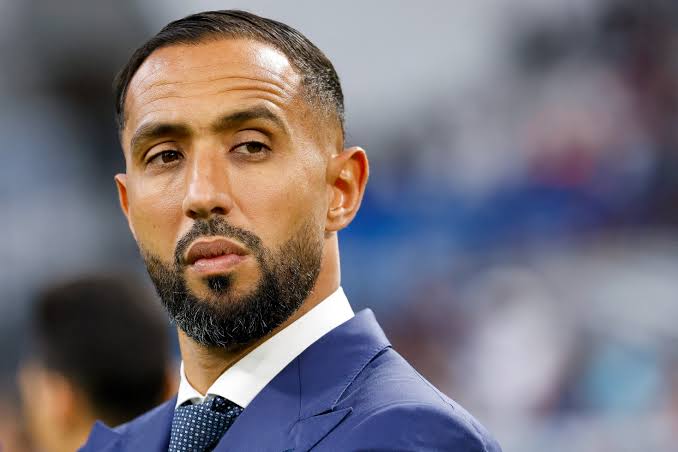
In a long interview with France Football published this Saturday, Mehdi Benatia looks back on his year and a half as Director of Football at Olympique de Marseille. The former executive describes an internal culture he deems mediocre and a flawed mentality. He includes himself in this, which most reports overlook.
What he says
Mehdi Benatia, 39, left Olympique de Marseille this summer after a year and a half as Director of Football. He speaks at length for the first time in France Football, in an interview published on Saturday, August 8.
The word that gives the interview its title recurs several times. Mediocrity, he says, is still present at the club, and "it is unfortunately well entrenched."
He clarifies what he means by that, and it's not primarily a question of sporting level: "I asked for what I had seen in Italy and Germany to be applied, discipline on principles of life, schedules. But the building is so full of mediocrity." He is referring to the Commanderie, the club's training center.
His most direct statement targets internal relationships: in Marseille, according to him, "being the player's best friend is more important than enforcing the rules."
The part that reports cut
This is where the interview becomes more interesting than its title.
Benatia doesn't just point to a flawed environment that he supposedly endured. He explicitly includes himself: "Director of Football, I had to bring in a good coach and a good squad. Was the team strong enough? Everyone says so: every day! Where we failed, and it's our responsibility, mine and the coaches', is on the mentality, weak, catastrophic."
A director who admits to having failed on the very point he criticizes the institution for is not the same as a unilateral settling of scores. The nuance disappears as soon as one only retains the word "mediocrity."
He also targets the players, without mincing words: "They chose their matches. The future of this club was in our hands."
The matches he cites
Benatia bases his assessment on specific dates rather than a general impression. The home defeat against Atalanta Bergamo in November. What he calls the humiliation against Bruges in January. And especially the two defeats against Nantes, which he describes as "the weakest since I've been watching Ligue 1."
He says he was at his wit's end, like Roberto De Zerbi before him: "With Roberto, we tried to fight against this. But even he couldn't take it anymore and preferred to leave." The Italian coach had renounced his final year of contract.
The experience "exhausted" him. In Marseille, he summarizes, "it was a constant war."
What he says that's good, too
The other half of the interview contradicts the portrait of a bitter man settling scores.
Benatia validates the work of his successors. On the coach: "With Genesio, they brought in a very good coach." On the sporting director who replaced him: "Greg Lorenzi proved himself at Brest." On the youth academy: "I hope to see young players emerge from the academy, where Titou Hasni is doing monstrous work."
He says he hopes "the people in place have the desire to clean things up," and projects himself as a spectator: "I'm becoming a supporter again, with the right to pay for my ticket and go to the stadium."
How to read this interview
A point of method, because it applies to all interviews of this type.
What Benatia says is verifiable on one level only: these are indeed his words, published by France Football, and they are reproduced here as they were reported. The content, however, is his point of view on an organization of which he was one of the leaders. We do not have the version of the players implicated, nor that of the management.
An interview given upon leaving a post is an interesting document precisely because it is partial. It sheds light on what its author experienced and what he wants us to remember. It is not an audit of the club, and no one has yet responded.
Sources: France Football, RMC Sport. As of August 8, 2026.